
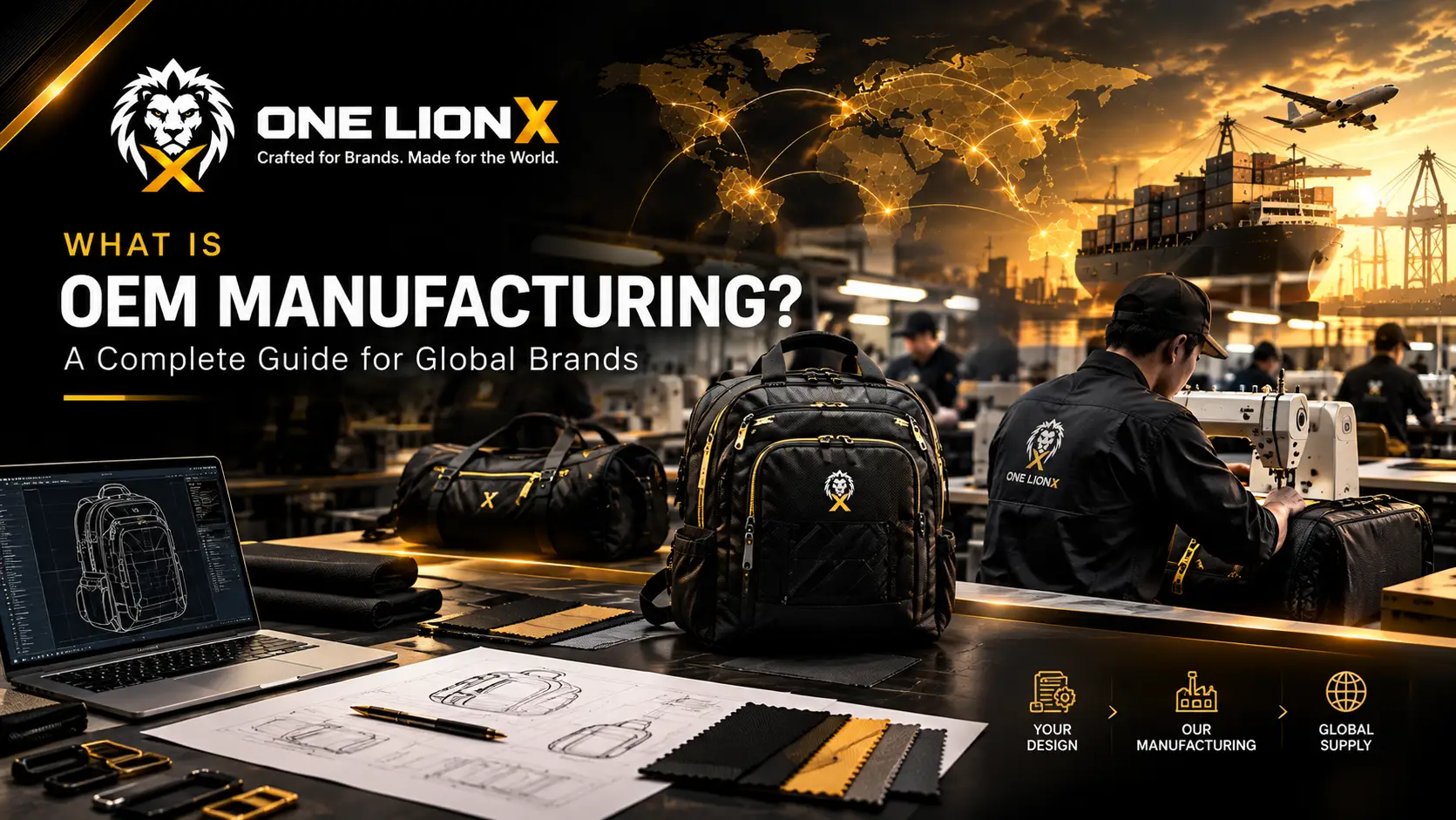
Learn what OEM manufacturing is, how the process works, its benefits, and what global brands should consider when choosing an OEM manufacturing partner.
What Is OEM Manufacturing? A Complete Guide for Global Brands
OEM manufacturing is a production model where a manufacturer develops or produces products according to a brand’s specific designs, specifications, materials, features, and requirements.
For global brands, wholesalers, distributors, and importers, OEM manufacturing can provide a structured way to develop customized products without managing every stage of production internally.
From product development and material selection to sampling, bulk production, quality control, packaging, and export preparation, an experienced OEM manufacturing partner can support multiple stages of the product lifecycle.
In this guide, we explain what OEM manufacturing means, how the process works, and what businesses should consider when selecting an OEM manufacturer.
What Does OEM Manufacturing Mean?
OEM stands for Original Equipment Manufacturer.
In an OEM manufacturing arrangement, a brand provides the product concept, design, specifications, technical requirements, or other production requirements, while the manufacturing partner produces the product according to the agreed specifications.
The level of involvement can vary depending on the project.
A brand may provide:
- Product drawings
- Technical specifications
- Reference samples
- Product dimensions
- Material requirements
- Color specifications
- Branding requirements
- Functional features
- Packaging requirements
The manufacturer then works through the required development and production stages to create the finished product.
Simple Example
A sports brand wants to launch a new custom sports bag.
Instead of manufacturing the bag itself, the brand can provide the design, dimensions, materials, colors, compartments, branding, and other requirements to an OEM manufacturer.
The manufacturer can then support:
Product Development → Sampling → Production → Quality Control → Packaging → Export
This allows the brand to focus on its market, customers, and brand development while working with a manufacturing partner for production.
How Does OEM Manufacturing Work?
OEM manufacturing generally involves several stages.
01 — Product Requirements
The process begins by understanding what the brand wants to manufacture.
This can include:
- Product type
- Dimensions
- Materials
- Colors
- Features
- Construction
- Branding
- Target market
- Estimated order quantity
- Packaging requirements
Clear product requirements help establish a practical manufacturing plan.
02 — Product Development
If the product requires development, the manufacturer works from the available information to create a production-ready product.
A project may begin with:
- An idea
- Sketch
- Drawing
- Reference image
- Existing product
- Sample
- Technical specification
The development process focuses on translating the requirements into a manufacturable product.
03 — Material Selection
Materials can significantly influence a product’s appearance, durability, weight, functionality, and overall construction.
Depending on the product, materials may include:
- Fabrics
- Synthetic materials
- Mesh
- Webbing
- Padding
- Lining
- Zippers
- Buckles
- Hardware
- Other components
Material selection should be aligned with the intended application and market requirements.
04 — Sample Development
Before moving into bulk production, a sample can be developed for review.
Sampling allows the brand and manufacturer to evaluate aspects such as:
- Design
- Dimensions
- Materials
- Construction
- Functionality
- Branding
- Finishing
Any required adjustments can then be discussed before production begins.
05 — Bulk Production
Once the product is finalized and approved, manufacturing can move into bulk production.
Production planning focuses on maintaining consistency across the order, including:
- Materials
- Dimensions
- Construction
- Colors
- Branding
- Components
- Finishing
- Packaging
For businesses ordering repeatedly, consistent production is particularly important for maintaining the same product specifications across different orders.
06 — Quality Control
Quality control is an important part of OEM manufacturing.
Checks can be performed during different stages of development and production to help maintain consistency in:
- Materials
- Stitching
- Construction
- Dimensions
- Components
- Branding
- Functionality
- Finishing
The exact inspection process depends on the product and the requirements agreed with the buyer.
07 — Packaging & Labeling
OEM products can also be prepared according to the brand’s packaging and labeling requirements.
This may include:
- Product labels
- Hang tags
- Logos
- Packaging
- Inserts
- Barcodes
- Product information
- Shipping requirements
Packaging requirements should be discussed early enough to coordinate them with production.
08 — Export Preparation
For international orders, finished products need to be prepared for shipment according to the agreed order and packaging requirements.
An export-oriented manufacturing partner can support the final stages of:
Production → Packaging → Labeling → Bulk Packing → Export Preparation
This creates a more structured supply process for international buyers.
What Products Can Be OEM Manufactured?
OEM manufacturing can be used across many product categories.
At One Lion X, our manufacturing focus includes:
Sports Bags
Custom sports bags, gym bags, team bags, equipment bags, and other sports-related carrying solutions.
Travel Bags
Travel duffel bags, weekend bags, travel backpacks, wheeled travel solutions, and other custom travel products.
Backpacks
Travel backpacks, business backpacks, laptop backpacks, sports backpacks, and custom backpack solutions.
Gym & Fitness Products
Products developed around fitness, training, gym, and performance requirements.
Gloves
Custom fitness, training, sports, cycling, outdoor, work, and utility glove solutions.
OEM Manufacturing vs Private Label
OEM manufacturing and private label manufacturing are related but can involve different approaches.
OEM Manufacturing
Your Product.
The brand provides or defines the product requirements, and the manufacturer produces the product according to those specifications.
Private Label
Your Brand.
A product may be selected from an existing or jointly developed range and then customized with the brand’s logo, labels, packaging, and other branding requirements.
Custom Manufacturing
Your Requirements.
The product is developed or customized around specific requirements such as dimensions, materials, construction, features, functionality, and branding.
The exact arrangement can vary between manufacturers and projects, so the scope should always be clearly agreed before production.
Why Do Brands Work With OEM Manufacturers?
Working with an OEM manufacturer can provide several practical advantages.
Access to Manufacturing Expertise
An experienced manufacturer can bring knowledge of materials, construction, production processes, and product development.
Product Customization
Brands can develop products around specific requirements instead of relying only on standard products.
Scalable Production
Once a product has been finalized, manufacturing can be organized around the required production volume.
Brand Control
OEM production allows brands to define important product and branding requirements.
International Supply
Businesses serving international markets can work with manufacturing partners capable of supporting bulk production and export preparation.
What Should You Look for in an OEM Manufacturing Partner?
Choosing a manufacturing partner requires more than simply comparing production prices.
Consider the manufacturer’s ability to support your complete project.
Product Development
Can the manufacturer work from your idea, drawing, sample, or technical specifications?
Material Knowledge
Can they help identify suitable materials and components for the intended product?
Customization
Can they accommodate your dimensions, features, construction, colors, and branding requirements?
Sampling
Can you review a sample before committing to bulk production?
Quality Control
What processes are used to maintain product consistency?
Production Capacity
Can the manufacturer support your expected order volumes and future repeat orders?
Packaging
Can packaging and labeling requirements be incorporated into the production process?
Export Capability
Can the manufacturer prepare products for international shipment?
These factors can help businesses evaluate whether a manufacturing partner is suitable for their particular project.
OEM Manufacturing Process at One Lion X
At One Lion X, our approach is built around the requirements of international brands, wholesalers, distributors, and importers.
Our manufacturing process can include:
01 — Requirements
Understand your product, specifications, target market, and order requirements.
02 — Development
Develop the product around the agreed design and specifications.
03 — Materials
Select suitable materials, components, and construction solutions.
04 — Sampling
Develop and review samples before bulk manufacturing.
05 — Production
Manufacture the approved product according to agreed specifications.
06 — Quality Control
Perform quality checks throughout relevant stages of production.
07 — Packaging
Prepare products according to agreed packaging and labeling requirements.
08 — Export
Prepare finished orders for international shipment and global supply.
When Should You Consider OEM Manufacturing?
OEM manufacturing can be relevant if you:
- Have your own product design
- Have a reference sample
- Want to develop a new product
- Need products under your own brand
- Require custom materials or construction
- Need bulk production
- Want private label or OEM support
- Are sourcing products for international markets
- Need a long-term manufacturing partner
Whether you are launching a new product or expanding an existing product line, the right manufacturing process begins with clear requirements.
Frequently Asked Questions
What is OEM manufacturing?
OEM manufacturing is a production arrangement where a manufacturer produces products according to a brand’s specified design, requirements, materials, features, or technical specifications.
What is the difference between OEM and private label?
OEM generally focuses on manufacturing a product according to the buyer’s requirements, while private label commonly focuses on selling a product under the buyer’s brand with agreed branding and customization.
Can OEM manufacturers develop products from an idea?
Yes. Depending on the manufacturer’s capabilities, product development can begin from an idea, sketch, reference image, sample, or technical specifications.
Can I customize materials and product features?
Yes. OEM projects can include customized materials, dimensions, colors, compartments, hardware, construction, branding, and other product features.
Can I order OEM products in bulk?
Yes. OEM manufacturing is commonly used for bulk production once the product has been finalized and approved.
Can OEM manufacturers support international export?
Manufacturers serving international buyers may support packaging, labeling, bulk packing, export preparation, and global supply requirements.
Start Your OEM Manufacturing Project
Have a product idea, existing design, reference sample, or specific manufacturing requirements?
One Lion X works with brands, wholesalers, distributors, and importers to develop and manufacture sports bags, travel bags, backpacks, gym & fitness products, and gloves.
From product development and sampling to bulk production, quality control, packaging, and global export, we provide a structured manufacturing solution around your requirements.
Your Product. Our Manufacturing Expertise.
REQUEST A QUOTE →
START YOUR OEM PROJECT →